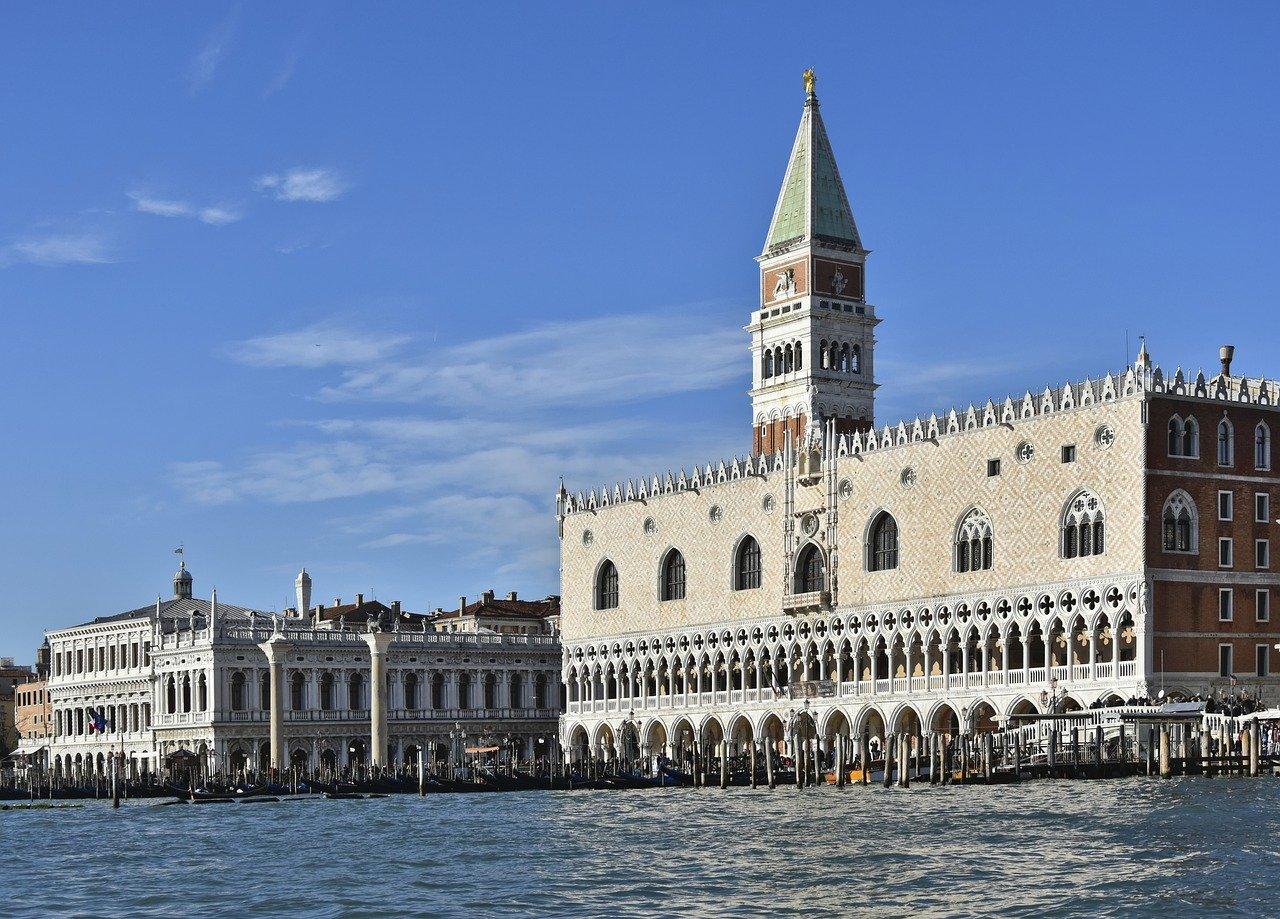
Ducal Palace – Doge’s Palace
One of the greatest symbols of Venice – if not the greatest – is the Ducal Palace, also known as the Doge’s Palace. Considered a true masterpiece of Venetian Gothic architecture.
History of the Ducal Palace Doge’s Palace
With a history as incredible as its architecture, it began as a fortified castle in the 9th century. After a fire, it was transformed into a fortress and prison. During its almost 1,000 years of existence, the Ducal Palace has been the residence of more than 120 doges.
Who were the doges?
In the early years of the Republic, Venice’s political system was autocratic, with the “doge” (from the Latin dux, “ruler”) being the ultimate symbol of power, the absolute representative of the Republic of Venice. His attributes, more symbolic than really political, are the heritage of the Byzantine Empire. It was only with the invasion of Napoleon Bonaparte in 1797 that the last doge, Ludovioco Manin, abdicated.
What to see inside the Doge’s Palace?
Besides housing famous paintings by great Italian painters such as Titian, Tintoretto and Bellini, the ducal palace combines Byzantine, Gothic and Renaissance elements, making it a real paradise for architecture and art history lovers.
Set aside at least two hours to visit the Palace. It’s not enough to say you’ve been there, the best part of the visit is immersing yourself in all the artworks scattered throughout the museum and learning about the history of this place. Be sure to do some research before you go, so you can better understand everything you find there.
In the Ducal Palace, you can enter the rooms where the doges resided, as well as the voting rooms, the arms depot, the courtyards and the emblematic prison.
The sumptuous “Duke’s Apartment” is impressive for its tapestries and works of art, as is the Sala del Maggior Consiglio, one of the most famous. It houses the “Paradise”, the largest painting in the world by the Italian artist Tintoretto.
The weapons room is a real lesson in the history of war, with weapons of all types and sizes. The tour ends in the prison, an unwelcoming but also impressive environment.
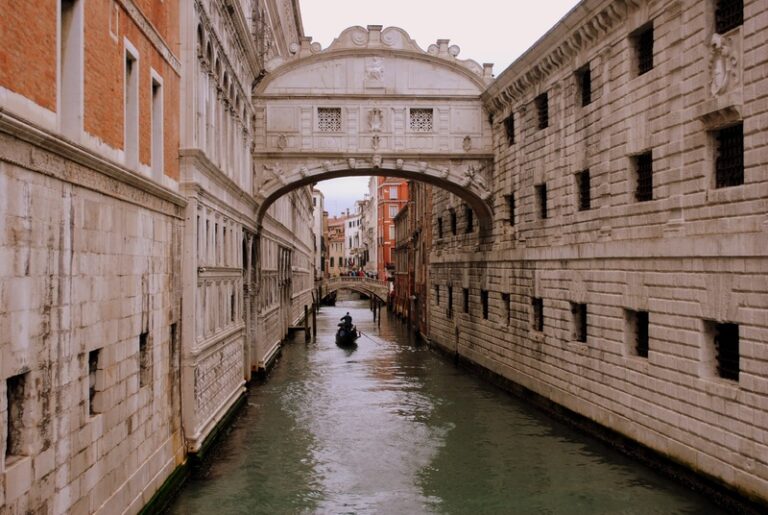
The highlight is the crossing of the famous Bridge of Sighs, built in baroque style in the seventeenth century, which gives access to the dungeons of the palace.
Video
Facts about the Doge’s Palace
This is where the Bocca di Leone is located, a sort of lion-faced mailbox, another important symbol of the city. In the past, it was here that people used to report illegal practices of citizens.
The Bridge of Sighs, which gives access to the Palace’s dungeons, received its name because it refers to the thousands of sighs of people who crossed it, not knowing if one day they would return.
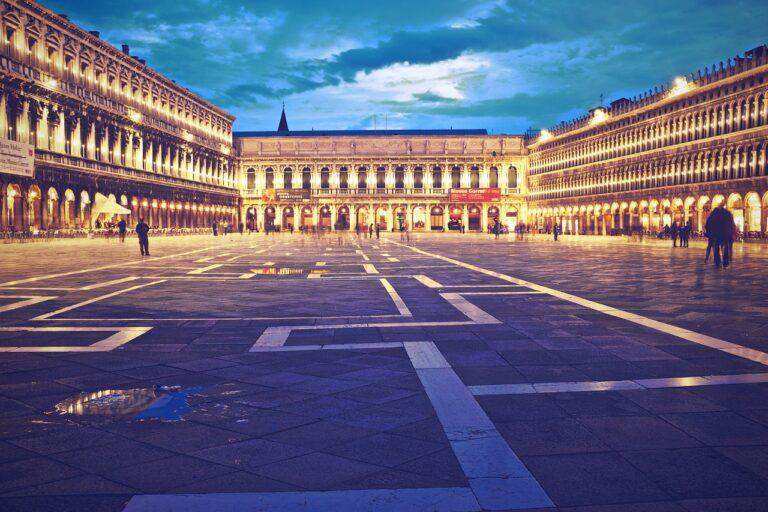
Next to the Ducal Palace is the famous and unique square of Venice, Piazza San Marco or St. Mark’s Square. One of the most beautiful squares in the world.
Nearby is also the Campanile di San Marco, which is the belfry of St. Mark’s Basilica, the highest building in the city, which offers one of the most beautiful views of the romantic city.
How to get to the Ducal Palace Doge’s Palace
The seat of government and court, the Ducal Palace is located right in the center of Venice, specifically in St. Mark’s Square, near the pier.
The cheapest and most convenient way to get to the Ducal Palace is by Vaporetto. Just take the San Zaccaria or San Marco lines 1, 2, 41, 42, 51, 52, N and LN.
Piazza San Marco, number 1, Venice
Times: 10 am to 6 pm in summer and 5:30 pm in winter (access allowed until 5 pm)
Ticket price: Full price: 26 €; reduced: €13 (children under 14, students under 25 and people over 65).
Home
https://goo.gl/maps/RePPChpxmNd1NCdw8